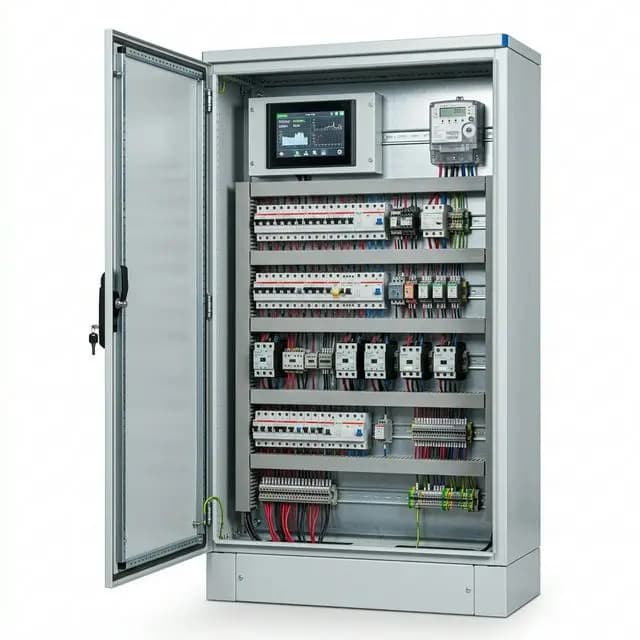
Industrial AI Market Update (2026-W15): OT Cyber Readiness Became the Fourth Budget Gate
Decision-oriented industrial AI update for OEMs, utilities, electrical equipment vendors, and integrators. In the 30 days ending April 8, 2026, deployment approval shifted from a 3-gate model to a 4-gate model with OT cyber readiness now explicit.
One-line decision for buyers: In the 30 days ending April 8, 2026, industrial AI programs moved from a three-gate approval model to a four-gate model: no budget confidence without a documented path for grid capacity, electrical delivery, OT connectivity, and OT cyber readiness.
Research window and method
This update covers March 9, 2026 to April 8, 2026 for United States + global industrial markets.
We ran three research angles and kept only items that changed integration, deployment, procurement, or operating risk decisions:
- Policy and standards track: DOE, NIST, Federal Register.
- Industrial deployment and infrastructure track: Siemens, Eaton, Hitachi Energy, Rockwell, EPRI.
- Operational risk and control-system security track: CISA ICS advisories for power and OT equipment used in industrial environments.
Inclusion rule: each item had to change at least one of these decision domains: deployment sequence, procurement gating, required evidence package, or commercial model assumptions.
What Changed (Last 30 Days)
| Date | Primary source | What changed | Buyer-side implication |
|---|---|---|---|
| 2026-03-12 | U.S. DOE Office of Electricity | DOE announced about $1.9B SPARK funding for rapid reconductoring and advanced transmission upgrades. | Grid modernization moved from abstract context to live procurement planning. |
| 2026-03-12 | U.S. DOE Office of Electricity | SPARK deadlines were set: concept papers due 2026-04-02, full applications due 2026-05-20. | Utility-facing and EPC timelines became immediate scope constraints. |
| 2026-03-19 | Eaton | Eaton launched Brightlayer Energy for AI-enabled building energy optimization and compliance reporting. | Building and campus buyers now score AI offers on operational energy behavior, not only dashboard features. |
| 2026-03-20 | U.S. DOE + DOC + SoftBank + AEP Ohio | Partnership announced around 10 GW generation, 10 GW data center development, and $4.2B transmission investment. | AI infrastructure is being bought as power-plus-transmission programs, not software-only projects. |
| 2026-03-20 | Siemens | Siemens announced a $165M U.S. manufacturing expansion and 350+ jobs for AI-related electrical infrastructure. | Electrical supply lead time and domestic capacity now affect deployment confidence. |
| 2026-03-23 | NIST | NIST published workshop reflections and reported 1,400+ comments on the Cyber AI Profile process. | Governance evidence requirements are moving toward implementation artifacts, not principle-only language. |
| 2026-03-23 | EPRI | EPRI launched Flex MOSAIC, a voluntary flexibility classification framework for large electric loads. | Utilities and large-load buyers now need a shared flexibility language beyond nameplate demand. |
| 2026-03-23 | Hitachi Energy | Hitachi launched HMAX Energy with plan/predict/prevent service framing. | Lifecycle reliability and service attach continue to gain budget priority over one-off pilot metrics. |
| 2026-03-26 | U.S. DOE Office of Nuclear Energy | DOE/INL/Microsoft/Everstar demonstrated AI-assisted licensing conversion: 208 pages in one day versus typical 4 to 6 weeks conversion work. | Regulated workflows can accelerate if expert validation and accountability stay explicit. |
| 2026-03-26 | Rockwell Automation | Rockwell framed Hannover Messe around industrial-grade AI, digital twins, and secure-by-design OT architecture. | Buyer expectations shifted from autonomy messaging to architecture and safety proof. |
| 2026-04-01 | Siemens | Siemens expanded private 5G to the U.S. and additional countries, including CBRS support and edge runtime on routers. | OT-grade connectivity is now part of AI readiness scoring in mobile and retrofit-heavy environments. |
| 2026-04-02 | CISA ICS Advisories | CISA republication activity highlighted Siemens SICAM and Hitachi Energy Ellipse vulnerabilities with mitigation guidance and revision history updates. | OT vulnerability response and patch-window planning are now explicit pre-scale requirements in AI rollout governance. |
Why it matters now
In earlier cycles, many teams treated cyber and patchability as a downstream IT/OT workstream. In this cycle, the practical sequence changed:
- Power and transmission path is checked first.
- Electrical equipment availability is checked second.
- OT connectivity architecture is checked third.
- OT vulnerability response and patchability is checked before scale approvals.
This sequence matters because it changes who must sign off before money is released: facilities, power engineering, OT security, and operations leaders now sit in the same decision room earlier.
Decision model: from three gates to four
| Gate | Required evidence now | Fast rejection trigger |
|---|---|---|
| Grid and transmission | Connection assumptions, load behavior, flexibility class | Load target provided without behavior profile |
| Electrical delivery | Supply path, lead times, protection and commissioning plan | No realistic equipment lead-time scenario |
| OT connectivity | Network architecture, deterministic behavior, fallback mode | Connectivity plan depends on best-case conditions only |
| OT cyber readiness | Patch process, advisory triage owner, segmentation and recovery plan | No patch-window plan for critical OT assets |
Who should act now
| Audience | Why this signal is material now | What to do in the next 30 days |
|---|---|---|
| OEM product teams | Buyers increasingly evaluate operational readiness before feature expansion | Publish one four-gate deployment architecture and owner matrix by product line |
| Utilities and grid-facing teams | Flexibility and timing assumptions now affect intake quality | Require flexibility profile and patch-governance assumptions at intake stage |
| Electrical equipment vendors | AI value is tied to installability and lifecycle reliability proof | Add serviceability and vulnerability-response commitments into proposal templates |
| System integrators | Scope now spans power, OT, cyber, and commercial risk | Price phase-zero work to include patchability and control-boundary assessment |
| Industrial and building operators | Pilot success no longer guarantees production approval | Run one readiness workshop with facilities, OT, cyber, operations, and finance |
Integration / deployment / commercial impact
Integration and deployment
- Program plans must include patchability constraints up front. CISA advisory activity on power/OT vendors is now part of deployment feasibility, not a post-go-live detail.
- Connectivity architecture must be paired with security operations. Private 5G and edge runtime can reduce integration friction, but they do not remove the need for incident response and update discipline.
- Regulated workflow acceleration is feasible with validation in loop. DOE nuclear licensing evidence suggests speed gains are possible if expert review remains explicit.
Commercial and procurement
- RFP criteria are widening. Teams that still score mainly on model capability and dashboard quality miss approval-critical risk gates.
- Service economics are becoming more defensible than pilot economics. Infrastructure vendors continue to position value around uptime, maintenance efficiency, and avoided failures.
- Procurement sequencing is changing. Buyers now need risk ownership across engineering, OT security, and operations before committing scale budgets.
Action Checklist (30 / 60 / 90 Days)
| Time horizon | OEMs and vendors | Utilities and integrators | Operators and facilities teams |
|---|---|---|---|
| Next 30 days | Add a four-gate appendix to every active proposal and architecture review | Add flexibility-class and patch-readiness questions to intake forms | Inventory OT assets that are in AI-critical workflows and map patch windows |
| Next 60 days | Launch one service-backed offer with explicit cyber-response SLA boundaries | Test one cross-functional scoping template for power, OT, and cyber dependencies | Run one tabletop exercise for advisory-to-mitigation workflow on a live site |
| Next 90 days | Convert one pilot proposal into production plan with named evidence owners | Include cyber readiness checkpoints in project milestone governance | Promote one use case to governed production with recovery and rollback criteria |
Risks, limits, and evidence gaps
| Risk or limit | What can be misread | How to handle it |
|---|---|---|
| Treating advisories as optional context | OT vulnerabilities are deferred until late-stage operations | Make advisory triage and patch windows part of pre-scale approval |
| Treating vendor metrics as universal | Reference-case percentages may not transfer to your asset base | Recalculate using your failure modes, labor model, and service process |
| Assuming one announcement equals a policy reset | No single final regulation in this window fully resets industrial AI deployment | Base decisions on converging operational signals across multiple primary sources |
| Overconfidence in connectivity upgrades | Better connectivity does not replace security controls or fallback design | Pair connectivity design with segmentation, monitoring, and recovery runbooks |
| Evidence gap on Federal Register rule changes | No direct industrial-AI-specific final rule was identified in the 30-day scan | Document this as a boundary and monitor weekly for legal changes |
FAQ
What changed most in this week-15 update?
The approval model changed. Programs now need to pass four gates before budget confidence increases: grid path, electrical delivery, OT connectivity, and OT cyber readiness.
Is this primarily a policy change?
No. The stronger shift in this window is operational and procurement-driven, not a single new binding law.
Why should OEM teams care right now?
Because customer approvals now fail on deployment-risk evidence, even when feature demos look strong.
Do CISA advisories prove active exploitation at our site?
No. They signal known vulnerability exposure and mitigation requirements; local exploitation risk still depends on your architecture and controls.
What is the most common buyer mistake now?
Treating OT security and patchability as an after-go-live activity instead of a scale-up gate.
How should utilities and integrators adjust intake?
Collect flexibility-class assumptions and cyber-response ownership at intake, not after technical design is mostly complete.
Can we use vendor percentages directly in a business case?
No. Use them as directional references, then recompute using your own baseline and operating constraints.
What should happen in the first cross-functional workshop?
Validate one real project against the four gates and assign owners, dates, and evidence artifacts for each gate.
Internal next reads
- Industrial AI market update (2026-W15)
- April 2026 industrial AI market update
- March 2026 industrial AI market update
- Industrial AI integration services
- AI retrofit programs
- OEM AI product development
If this update changed your roadmap, run one live project through the four-gate model this week. That will expose the highest-risk hidden assumptions faster than another generic AI strategy deck. For support, use industrial AI integration services or contact us.
Sources
- Energy Department Announces $1.9B Investment in Critical Grid Infrastructure to Reduce Electricity Costs — U.S. Department of Energy Office of Electricity — March 12, 2026.
- Energy Department Announces Partnership to Ensure Affordable Energy and Power America’s AI Future — U.S. Department of Energy — March 20, 2026.
- Department of Energy Unleashes AI to Reduce Reactor Licensing Timelines — U.S. Department of Energy Office of Nuclear Energy — March 26, 2026.
- Reflections from the Second NIST Cyber AI Profile Workshop — National Institute of Standards and Technology — March 23, 2026.
- EPRI Launches Flex MOSAIC to Reduce ‘Time to Power’ for Data Centers — Electric Power Research Institute — March 23, 2026.
- Siemens invests $165 million to expand U.S. manufacturing for AI infrastructure — Siemens AG — March 20, 2026.
- Siemens expands its private 5G infrastructure to the United States and seven additional countries — Siemens AG — April 1, 2026.
- Eaton unveils Brightlayer Energy, an AI-powered energy management and optimization software — Eaton — March 19, 2026.
- Hitachi launches HMAX Energy, a pioneering AI-powered service and solution suite for critical energy infrastructure — Hitachi Energy — March 23, 2026.
- Rockwell Automation Showcases Autonomous Industrial Operations at Hannover Messe 2026 — Rockwell Automation — Published March 26, 2026.
- Siemens SICAM 8 Products (ICSA-26-092-01) — CISA ICS Advisory — Published March 26, 2026; CISA republication revision April 2, 2026.
- Hitachi Energy Ellipse (ICSA-26-092-03) — CISA ICS Advisory — Initial public release February 24, 2026; CISA republication revision April 2, 2026.
For Federal Register boundary checking in this window, see:
- Request for Information on Artificial Intelligence Infrastructure on DOE Lands — Department of Energy — April 7, 2025 (outside this 30-day window; included as historical context).
作者

Jimmy Su
分类
更多文章
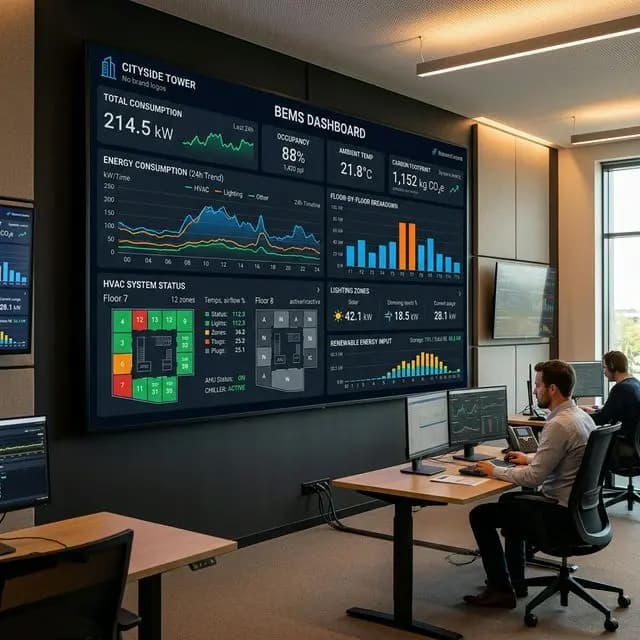
Industrial AI Market Update (2026-W15): Grid Access, Electrical Supply, and OT Connectivity Became One Buying Decision
Week 15 market update for OEMs, utilities, and industrial operators: why industrial AI programs now pass or fail on grid access, electrical infrastructure supply, and OT connectivity readiness.
April 2026 Industrial AI Market Update: Flexibility, Retrofitability, and Service-Led Infrastructure Enter the Buying Checklist
Industrial AI market update for April 2026: power flexibility, retrofit paths, OT governance, and service economics shaping OEM and utility buying decisions.

Industrial AI Market Update (2026-W16): Grid and OT Governance Reset the Buyer Approval Standard
Decision-oriented update for OEMs, utilities, electrical equipment vendors, and system integrators. In the 30 days ending April 18, 2026, interconnection reform, critical-infrastructure AI risk profiling, and OT threat activity converged into a stricter go-live standard.