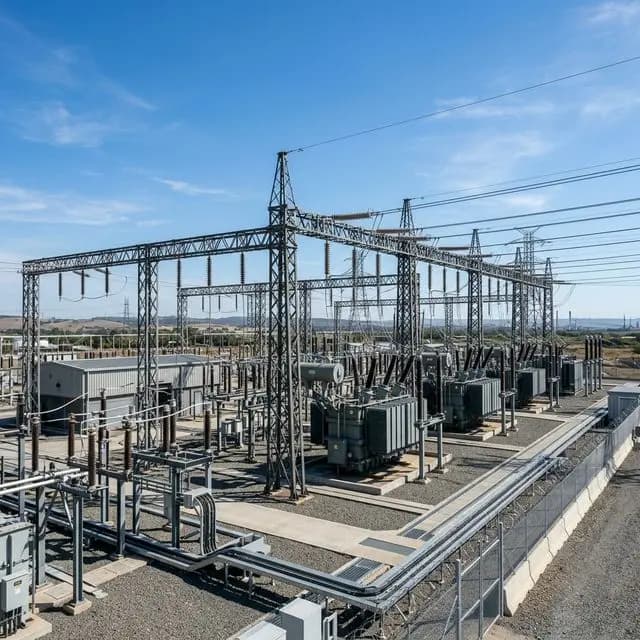
March 2026 Industrial AI Market Update: Power, Interoperability, and Validation Move Ahead of Model Novelty
A decision-oriented update for OEMs, utilities, electrical equipment vendors, system integrators, and building operators. In the last 30 days, DOE funding, utility-readiness signals, and major infrastructure vendor moves shifted industrial AI from a model-selection topic into a power, controls, and deployment execution program.
Bottom line: In the last 30 days ending March 24, 2026, the strongest industrial AI signal was not a new model launch. It was the convergence of grid-capacity spending, utility-readiness signals, open automation, and AI-ready power-plus-building stacks. For buyers and integrators, that changes the work: the gating questions are now power readiness, interoperability, cyber resilience, and retrofit economics.
Research window and filter
This update covers the 30-day window ending March 24, 2026 and focuses on United States plus global industrial markets.
We only included items that changed at least one of these decisions:
- product packaging for OEMs
- deployment architecture for utilities or system integrators
- electrical or building infrastructure scope
- procurement language, service scope, or commercial timing
We excluded generic AI commentary, undated vendor vision pages, and product announcements that did not change deployment requirements.
We also used a small number of pre-window background sources for cyber, utility-evaluation, and energy-innovation context. Those are explicitly marked in the sources section and are not treated as part of the core 30-day event cluster.
Executive summary
- Industrial AI is becoming infrastructure-first. The March signal is that power capacity, electrical distribution, and building or plant controls now sit directly on the critical path for AI deployment.
- Utility-side readiness is moving from theory to funded execution. On March 12, 2026, the U.S. Department of Energy announced a $1.9 billion grid-upgrade funding opportunity under SPARK, explicitly tied to rising electricity demand and grid capacity needs.
- Open and backward-compatible control stacks are becoming a buying requirement. On March 2, 2026, Schneider Electric argued that open automation breaks hardware-bound lock-in, while Siemens positioned autonomous buildings around Industrial AI plus open, backward-compatible building control.
- Mission-critical facilities are treating AI as an electrical and operations problem, not only a software problem. On March 4, 2026, Schneider Electric framed AI-ready healthcare operations around power continuity, secure digital infrastructure, building systems, and predictive analytics in one stack.
- Validation and cyber controls still limit rollout speed. DOE's utility-facing 2026 programming still emphasizes balancing AI reward against performance and security risk. That matters for utilities, electrical equipment vendors, and any OEM promising autonomy in regulated or safety-sensitive environments.
What changed in the last 30 days
| Date | Official source | What changed | Why this matters for buyers |
|---|---|---|---|
| 2026-03-02 | Schneider Electric | Schneider argued that open automation decouples software from hardware, improves interoperability, and lets AI access data from multiple sources without compatibility barriers. | OEMs and system integrators should stop treating AI add-ons as isolated software features. The control stack and interface model now shape cost, retrofit speed, and vendor lock-in. |
| 2026-03-02 | Siemens | Siemens framed autonomous buildings around Industrial AI, smart electrification, open architecture, and backward compatibility. | Building-system buyers should ask whether AI can be layered onto existing infrastructure without replacing every controller, panel, or BMS component. |
| 2026-03-04 | Schneider Electric | Schneider packaged AI-ready healthcare infrastructure as a combined offer: power, building systems, UPS, electrical digital twin, predictive analytics, and cybersecurity. | In mission-critical environments, AI adoption is increasingly sold as a facility-wide resilience program, not as a standalone analytics tool. |
| 2026-03-05 | U.S. Department of Energy Office of Electricity | DOE listed a Distribution Transformer Convening Webinar immediately alongside its utility-AI and control-room activities. | That is an official signal that electrical hardware availability and grid equipment planning are part of the same deployment conversation as operational AI. |
| 2026-03-12 | U.S. Department of Energy | DOE announced a $1.9 billion SPARK funding opportunity to accelerate reconductoring and other advanced transmission technology upgrades to meet rising electricity demand. | Utilities, EPC firms, and electrical equipment vendors should assume grid-capacity and connection lead times are now direct commercial constraints on AI-ready facilities and large-load industrial programs. |
Why this matters now
The practical shift is straightforward:
- In 2024 and 2025, many industrial AI conversations were still framed as "Which model should we use?"
- In March 2026, the stronger question became "Can our physical system support, integrate, validate, and safely operate the AI we want to deploy?"
That is a more consequential market shift than another foundation-model benchmark for four reasons.
1. Electrical infrastructure is now part of the AI business case
DOE's March 12, 2026 SPARK announcement explicitly tied transmission upgrades to rising electricity demand and capacity requirements. That moves power availability from background assumption to front-office procurement issue.
For industrial buyers, the implication is simple: if the site, feeder, substation path, or backup-power architecture cannot support the target load profile, the AI roadmap is not real yet.
2. Interoperability is moving from "nice to have" to investment screen
Schneider's March 2 open-automation position and Siemens' March 2 building-control position point in the same direction:
- buyers want modular upgrades
- operators want lower integration drag
- OEMs want faster feature release cycles
- facilities teams want AI on top of existing infrastructure, not a forklift replacement
If the control and data model remain proprietary and hardware-bound, AI feature roadmaps will keep stalling in services-heavy custom projects.
3. The market is rewarding AI-ready infrastructure, not AI widgets
Schneider's March 4 HIMSS26 positioning is notable because it did not sell "AI" in isolation. It sold:
- power continuity
- cybersecure digital infrastructure
- electrical digital twin capability
- building-system integration
- AI-driven operational resilience
That packaging will likely spread beyond healthcare into campuses, utilities, industrial plants, and other high-uptime environments.
4. Utilities still need proof, not only promise
DOE's utility-facing 2026 programming, including the February 5, 2026 DTECH sessions cited in the source list as background, emphasized AI adoption workbook, risk and readiness evaluation, and the need to rigorously vet AI for performance and security in control-room environments.
That is an important boundary condition:
This is not a market signal that utilities are ready to buy autonomous operations at scale tomorrow. It is a signal that utility buyers are formalizing how they will evaluate AI, where it can be tested safely, and which infrastructure bottlenecks sit ahead of deployment.
The new deployment stack
| Old assumption | What March 2026 changed | Decision consequence |
|---|---|---|
| We can add AI after the hardware decision. | DOE and major infrastructure vendors are now treating power capacity and electrical backbone as part of the AI path. | Move power, protection, and site-capacity review into the first scoping meeting. |
| Proprietary controls are acceptable if the demo works. | Schneider and Siemens both emphasized interoperability, open architecture, or decoupled software layers. | Add interface openness, backward compatibility, and migration path to the vendor scorecard. |
| AI pilots can be evaluated without facility context. | Schneider's March 4 portfolio linked AI with UPS, digital twin, smart distribution, and building systems. | For buildings and campuses, pilot scope must include facilities, IT, and electrical stakeholders. |
| Utility AI is mainly a software evaluation task. | DOE still centers risk, readiness, performance, and security, while keeping hardware and grid innovation on the same agenda. | Utilities should treat AI rollout as an operations-and-assurance program, not a chatbot procurement exercise. |
Who should care
| Audience | What changed for you | What to ask now |
|---|---|---|
| OEM product teams | AI value increasingly depends on whether products expose usable data, support modular upgrades, and fit real power and control environments. | Can our installed base be upgraded incrementally, or does every AI feature require a redesign and service-heavy integration? |
| Utilities | AI adoption is being evaluated in parallel with control-room safety, grid hardware, and capacity planning. | Where do we need test-bed validation, fallback operation, and hardware lead-time mitigation before approving rollout? |
| Electrical equipment vendors | Smart breakers, transformers, protection, and power-distribution products are moving closer to the AI budget conversation. | Are we selling hardware only, or an AI-ready data and service layer with cyber and interoperability proof? |
| System integrators | Integration margin will increasingly come from stitching together power, controls, OT data, and operating workflows. | Can we scope retrofit architecture, data normalization, and validation faster than competitors? |
| Industrial operators and building owners | The main buyer risk is under-scoping electrical and operational change while over-focusing on software. | Do we have enough site power, control access, and governance maturity to operate AI continuously and safely? |
Integration and deployment impact
OEM product teams: design for incremental upgrade, not only new-SKU launch
If Schneider is right that open automation is breaking hardware-bound architectures, then OEMs should expect buyers to ask for:
- protocol and data openness
- backward compatibility with installed fleets
- controller or gateway retrofit options
- local fallback behavior when AI is unavailable
- lower engineering effort for integration partners
In practical terms, the product roadmap should split into two tracks:
- AI-capable new products
- Installed-base modernization packages
The second track is usually where budget lands first, because it avoids full replacement cycles.
Utilities: formalize where AI can be trusted and where it still needs human override
DOE's utility-facing programming in February and March did not present AI as a blanket operational default. It emphasized:
- benefits, risks, and readiness
- structured evaluation
- performance and security vetting
- collaborative test-bed logic for control-room technologies
That means utility AI budgets should be separated into at least three lanes:
- operator support and decision assistance
- planning and asset analytics
- closed-loop or high-consequence operational automation
Only the third lane should face the heaviest validation threshold.
Building systems: AI-ready facilities now require a combined electrical-plus-digital architecture
The March 4 Schneider announcement is important because it made three points explicit:
- AI adoption can materially increase facility electrical stress
- operators need visibility across power, building, and digital systems together
- cybersecure uptime infrastructure is part of the AI deployment stack
This matters far beyond hospitals. The exact two-to-two-and-a-half-times demand claim came from Schneider's healthcare framing, so it should not be generalized to every building type. But the structural lesson still travels:
- AI-ready facilities need an electrical backbone
- digital twins become more useful when electrical behavior matters
- uptime and resilience products can move from "insurance" spend to "AI program" spend
System integrators: the integration scope is widening, but so is the billable value
March's signal favors integrators who can combine:
- OT data access
- electrical system understanding
- controls integration
- cyber assurance
- AI workflow design
That is a more defensible scope than generic prompt-engineering or dashboard work. It also means SIs should price discovery differently: site power review, controller inventory, interface mapping, and fallback design belong in phase zero.
Commercial impact
| Commercial area | What is changing | Likely winner |
|---|---|---|
| Product packaging | Buyers are moving from "AI feature" to "AI-ready infrastructure" packages. | Vendors that sell connected hardware, resilience, and analytics as one offer. |
| Services attach | Retrofit, integration, validation, and monitoring services become harder to unbundle from software. | OEMs and SIs with repeatable implementation playbooks. |
| Procurement language | RFPs will increasingly ask about open interfaces, cyber posture, power continuity, and migration path. | Suppliers that can prove interoperability and fallback behavior. |
| Sales motion | Facility, electrical, IT, OT, and operations stakeholders now need to buy together. | Teams that can run multi-stakeholder discovery without losing speed. |
| Margin structure | Margins shift away from one-time licenses toward lifecycle modernization and operations support. | Vendors with recurring service and monitoring layers. |
The key commercial lesson is that infrastructure adjacency is becoming revenue adjacency.
If you sell smart breakers, switchgear, gateways, controllers, or building-management software, March 2026 is a warning not to leave the AI budget conversation to software-only vendors.
Risks, limits, and what not to over-read
Do not over-read the signal. March 2026 did not produce a single new law or universal industrial AI standard that resets the market overnight.
The limits matter:
- Vendor announcements are still vendor announcements. They show where major suppliers are packaging budget, but they do not guarantee immediate customer adoption at scale.
- Healthcare is a strong but specific proxy. Schneider's March 4 demand and resiliency framing is highly relevant to mission-critical environments, but it should not be copied blindly into every warehouse, school, or light-commercial retrofit.
- Funding does not equal instant capacity. DOE's March 12 SPARK opportunity can accelerate upgrades, but concept papers and applications still take time, and physical grid work has long lead times.
- Utility AI still has a validation ceiling. DOE's own framing shows that high-consequence operational AI remains constrained by testing, performance proof, and security review.
- Open architecture claims need contract-level proof. Buyers should still ask which protocols, data rights, migration tools, and lifecycle responsibilities are actually included.
Recommended next actions
| Time horizon | OEM product teams | Utilities and electrical equipment teams | Building operators and system integrators |
|---|---|---|---|
| Next 30 days | Audit which SKUs or installed fleets expose usable telemetry and where controller lock-in blocks AI features. | Separate AI use cases into decision support, asset analytics, and closed-loop control; assign different validation thresholds. | Add electrical-capacity review and backup-power assumptions to every AI or digital-building scope. |
| Next 60 days | Define one retrofit-first offer with clear interface, gateway, and fallback requirements. | Review transformer, feeder, breaker, and substation constraints that could delay AI-ready or large-load programs. | Build one repeatable discovery checklist covering power, controls, OT data, cyber, and operating workflow. |
| Next 90 days | Package AI with service economics: commissioning, remote monitoring, lifecycle upgrade, and measurable operator outcomes. | Pilot in a bounded environment with explicit performance, safety, and rollback criteria. | Convert "AI pilot" proposals into resilience and operations-upgrade proposals with named electrical and building stakeholders. |
Three concrete scenarios
Scenario 1: A circuit-breaker or switchgear OEM wants to add predictive features
The March signal says the differentiator is not only the model. It is whether the offer includes:
- instrumented data path
- remote diagnostics
- built-in cyber controls
- interoperability with customer power systems
- a retrofit motion for installed equipment
If those pieces are missing, the OEM is still selling a pilot, not a product line.
Scenario 2: A utility wants AI in the control room
The wrong move is to bundle every AI use case under one policy. The right move is to classify:
- advisory use cases
- workflow and documentation assistance
- asset-health analytics
- closed-loop operational decisions
The validation, security, and fallback burden rises sharply as the use case moves closer to direct system control.
Scenario 3: A campus or hospital operator wants AI-ready infrastructure
The March 4 Schneider framing suggests a better scoping question:
What must be true in the electrical, building, and digital infrastructure before AI can operate reliably every day?
That usually means checking:
- backup power
- monitoring coverage
- building-management integration
- electrical model quality
- onsite data continuity
FAQ
Is this mostly a utility story or a broader industrial story?
It is broader. Utilities are the clearest place where infrastructure, safety, and AI evaluation visibly converge, but the same logic now applies to OEM products, smart buildings, and electrical equipment programs.
Did a new industrial AI regulation cause this shift?
No. The March 2026 signal is mainly operational and commercial, not regulatory. Government activity mattered because DOE funding and utility-facing programs raised the importance of grid capacity, validation, and readiness.
Should OEMs pause AI launches until grid issues are solved?
No. They should scope launches differently. New offers need clearer power assumptions, retrofit paths, and interoperability commitments.
Does open automation automatically make AI deployments easier?
Not automatically. It reduces one major barrier by decoupling software from hardware and improving interoperability, but data quality, cyber controls, and site constraints still matter.
Why do building systems matter in an industrial AI market update?
Because many AI programs now live in or depend on real facilities: campuses, plants, data-heavy buildings, and mission-critical sites. Power continuity and building controls are increasingly part of the deployment path.
Is the Schneider healthcare demand claim a market-wide number?
No. The two-to-two-and-a-half-times demand statement came from a healthcare-specific March 4, 2026 Schneider press release. Treat it as a sector-specific signal, not a universal benchmark.
What is the most important buyer question now?
Ask: What physical, control, and governance layers must be upgraded before this AI can run safely and profitably in production?
What changes in RFPs because of this update?
Expect more emphasis on open interfaces, migration path, cyber posture, power continuity, resilience, and proof of fallback behavior.
What should system integrators change first?
Change discovery. If the first workshop still covers only use cases and dashboards, the SI is missing the highest-risk deployment blockers.
Where can utilities move fastest?
Decision support, planning support, documentation, and bounded asset analytics usually move faster than autonomous operational control.
Where can OEMs move fastest?
Installed-base modernization and remote diagnostics often monetize faster than full autonomy because they fit existing service motions and avoid wholesale platform replacement.
What would count as a stronger future signal than this one?
A stronger signal would be one of the following:
- large utility procurement tied to explicit AI operating criteria
- major OEM contracts that specify open, AI-ready retrofit architecture
- widely adopted standards or profiles that formalize interoperable industrial AI deployment requirements
Internal next reads
- Industrial AI integration services
- OEM AI product development
- Utilities industry page
- Electrical equipment industry page
- Building systems industry page
- Building energy optimization solution
- Edge AI for industrial sensors
If this March update changed your roadmap, the practical next step is to review one live product family, facility, or utility workflow against the deployment stack above. That usually makes the real blockers visible in one workshop. Start with Industrial AI integration services or contact us.
Sources
- Energy Department Announces $1.9B Investment in Critical Grid Infrastructure to Reduce Electricity Costs — U.S. Department of Energy — March 12, 2026.
- Join the Office of Electricity at DTECH 2026 in San Diego, CA February 2 – 5, 2026 — U.S. Department of Energy Office of Electricity — February 2-5, 2026, including a listed March 5, 2026 distribution transformer webinar and utility-AI programming.
- Siemens showcases journey from smart to autonomous buildings at Light + Building 2026 — Siemens — March 2, 2026.
- Open automation is breaking legacy chains in 2026 — Schneider Electric — March 2, 2026.
- Schneider Electric Showcases Full Suite of Energy Technology Solutions to Strengthen Healthcare Resiliency and Support AI Adoption at HIMSS26 — Schneider Electric — March 4, 2026.
- The State of Energy Innovation 2026 — International Energy Agency — February 17, 2026. Used as context for how energy innovation is tilting toward competitiveness and security.
- NIST IR 8596 ipd: Cybersecurity Framework Profile for Artificial Intelligence (Cyber AI Profile) — National Institute of Standards and Technology / NCCoE — December 16, 2025. Used as background for cyber and assurance framing outside the 30-day window.
- Transmission Asset Management Analytics (P34) 2025 accomplishments / 2026 plan PDF — Electric Power Research Institute — Last modified February 3, 2026 (server header; exact publication date not explicit on the PDF). Used as background evidence that utilities are formalizing LLM and transformer-analytics work.
Author

Jimmy Su
Industrial AI and automation market analyst
Categories
More Posts
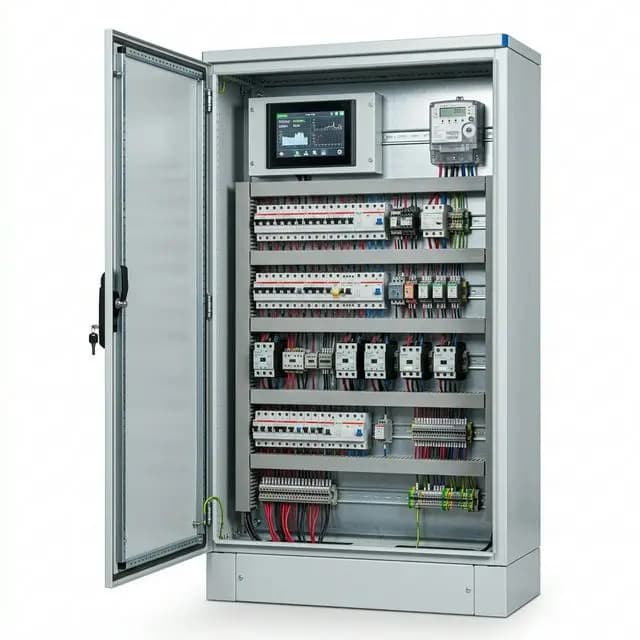
April 2026 Industrial AI Market Update: Flexibility, Retrofitability, and Service-Led Infrastructure Enter the Buying Checklist
Industrial AI market update for April 2026: power flexibility, retrofit paths, OT governance, and service economics shaping OEM and utility buying decisions.
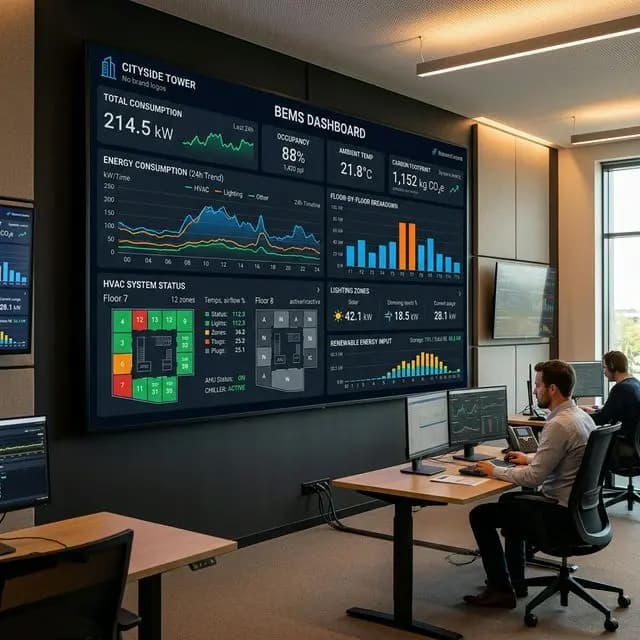
Industrial AI Market Update (2026-W15): Grid Access, Electrical Supply, and OT Connectivity Became One Buying Decision
Week 15 market update for OEMs, utilities, and industrial operators: why industrial AI programs now pass or fail on grid access, electrical infrastructure supply, and OT connectivity readiness.
Industrial AI Market Update (2026-W15): OT Cyber Readiness Became the Fourth Budget Gate
Decision-oriented industrial AI update for OEMs, utilities, electrical equipment vendors, and integrators. In the 30 days ending April 8, 2026, deployment approval shifted from a 3-gate model to a 4-gate model with OT cyber readiness now explicit.
Direct email
No newsletter signup
We are not running a newsletter. Use [email protected] for project questions, resource requests, and follow-up discussions.