Industry: Building Systems
AI positioning for connected controls, HVAC workflows, and building operators
Building systems teams need practical pages that connect control logic, local sensing, energy targets, and service operations.
Where building-system buyers focus
Control responsiveness
They want room or zone control that reacts more intelligently to local conditions.
Energy-performance outcomes
They need a clear path from data and control context to operating improvements.
Service and tuning visibility
They care about drift, exceptions, and how teams support systems after deployment.
How the buyer journey typically looks
Review the control stack
Understand controllers, BMS logic, sensing layers, and override paths.
Choose the first optimisation outcome
Start with a narrow outcome that matters to operators and can be supported technically.
Pilot with operations involved
Validate energy or comfort logic in a scope that operations teams can evaluate honestly.
Support and tune post-launch
Define how settings, support, and reporting work after rollout.
Most relevant page paths
Service pages
- Industrial AI integration
- Embedded AI development
- Connected product AI
Solution pages
- Building energy optimization
- Edge AI for industrial sensors
- AI visual inspection when facility QA matters
Lead qualification
- Which control layer is in scope?
- What sensing is available?
- Who owns energy or comfort outcomes?
When the building team is really buying a leak workflow
Use the leak-detection hybrid page when the buyer cares about water alerts, governed shutoff, refrigerant analytics, or damage prevention rather than a broader BAS strategy.
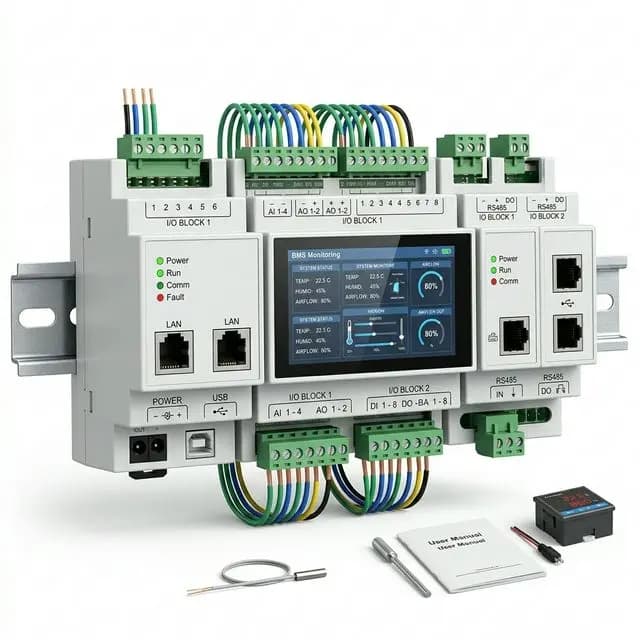
AI leak detection
This canonical stays on building water, valve governance, refrigerant fault signals, and leak-specific operating boundaries without collapsing back into generic BAS language.
FAQ
Should this be treated like a general automation page?
No. Buyers need pages that explain control context, local signals, and post-launch support in building-system language.
Does every building keyword need its own route?
No. Many modifiers should merge under energy optimization or building-systems canonicals instead of spawning thin variants.
What is the strongest CTA for these buyers?
Architecture review usually works best first, because control context and deployment constraints often need validation before a quote.
Tell us the device context and commercial goal
Share the product family, deployment environment, and target outcome. We will tell you whether the next step is a scoped quote or an architecture review.