Use Case: Building Energy Optimization
Improve building energy decisions with better control context and edge intelligence
For teams working on connected HVAC, room control, occupancy, and building management workflows where local context changes operating decisions.
Typical value areas
Smarter room-level response
Use local occupancy and control signals to improve how the building reacts throughout the day.
Better use of operating data
Combine controller context, schedules, and edge signals into more useful optimisation logic.
Clearer service insight
Turn operational drift or repeated exceptions into maintenance and tuning decisions.
Implementation stages
Review control and sensing context
Understand what controllers, occupancy signals, schedules, and override logic exist today.
Define the optimisation target
Choose the balance between energy, comfort, response speed, and service practicality.
Pilot on a constrained scope
Validate the operating logic in one building, floor, or zone before wider rollout.
Support rollout and tuning
Document how teams monitor outcomes, tune settings, and support the system over time.
Fit and concerns
Best fit
- Building operators with connected controls
- System integrators packaging energy improvements
- OEMs shipping building-control hardware
Buyer concerns
- How much local context is available
- Comfort versus energy trade-offs
- What support is required post-launch
CTA path
- Architecture review when control context is still unclear
- Quote when the building scope and goals are already known
When the scope is broader than one building stack
Use the cross-asset EMS page when the buyer is moving from one BAS or one building into portfolio-wide metering, demand management, DER, or mixed-asset orchestration.
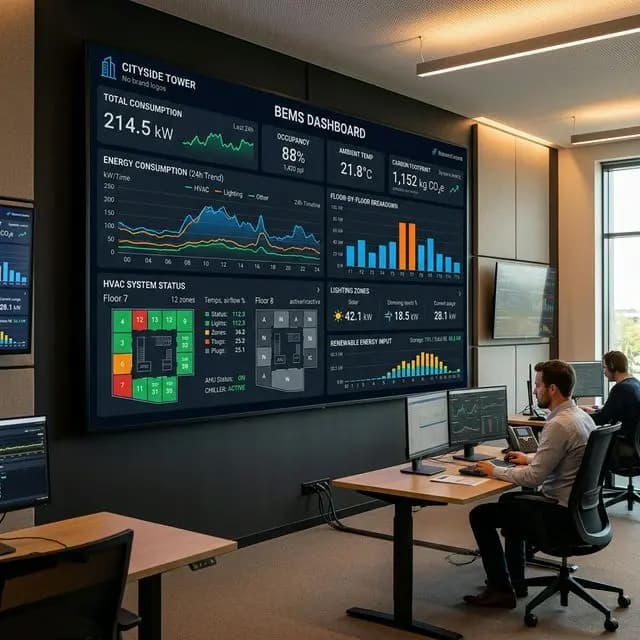
AI energy management systems
This page stays focused on cross-asset EMS architecture, load-management lanes, and controls integration without collapsing back into building-only optimization.
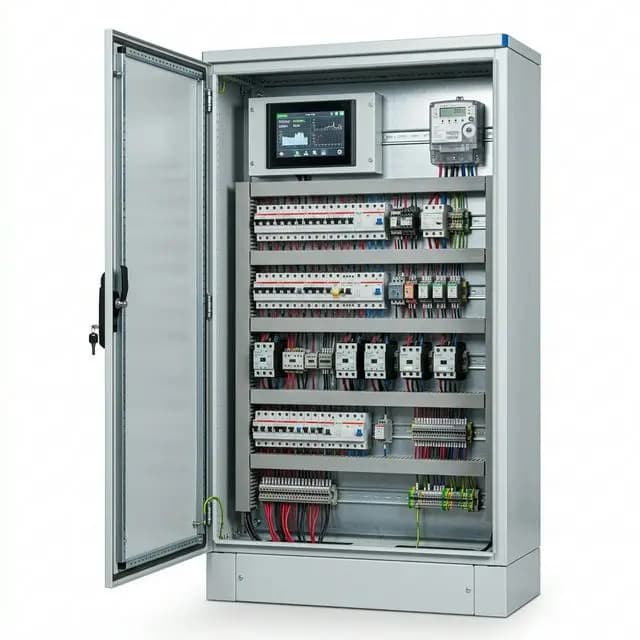
AI energy optimization
Use this page when the buyer wants a measurable industrial pilot across campus loads or process utilities and still needs to choose the first proof metric and optimization lane.
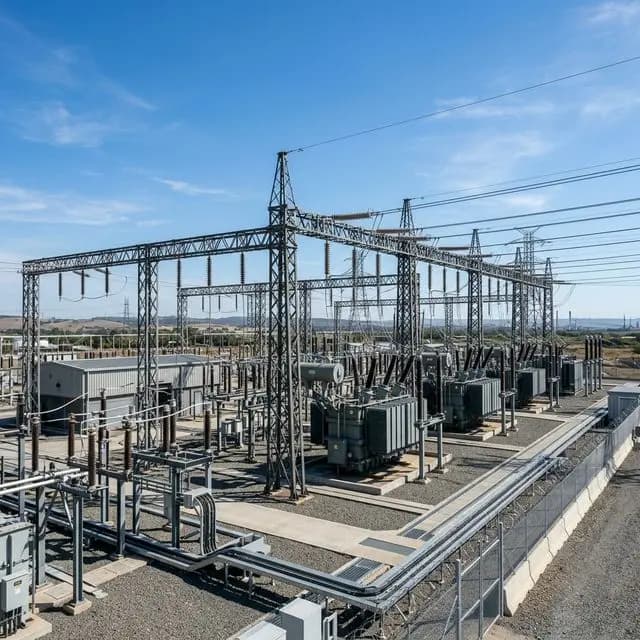
AI EV charging infrastructure
Use this page when EV charging infrastructure, charger uptime, demand windows, or site-level power allocation become the main problem instead of BAS-only optimization.

AI for industrial process control
Use this page when the work shifts from BAS tuning into unit-level process loops, operator safeguards, APC layering, or process-utility control inside an industrial plant.
FAQ
Is this only for large commercial buildings?
No. The deciding factor is whether the control and occupancy context supports a meaningful optimisation workflow.
Does this replace existing BMS logic?
Not necessarily. In many cases the goal is to augment and tune existing systems, not rip them out.
Why is edge AI relevant here?
Because local control conditions and response timing matter. Not every useful building decision should wait for a cloud round trip.
Tell us the device context and commercial goal
Share the product family, deployment environment, and target outcome. We will tell you whether the next step is a scoped quote or an architecture review.